
Article: How to avoid bad odors in the intimate area of men
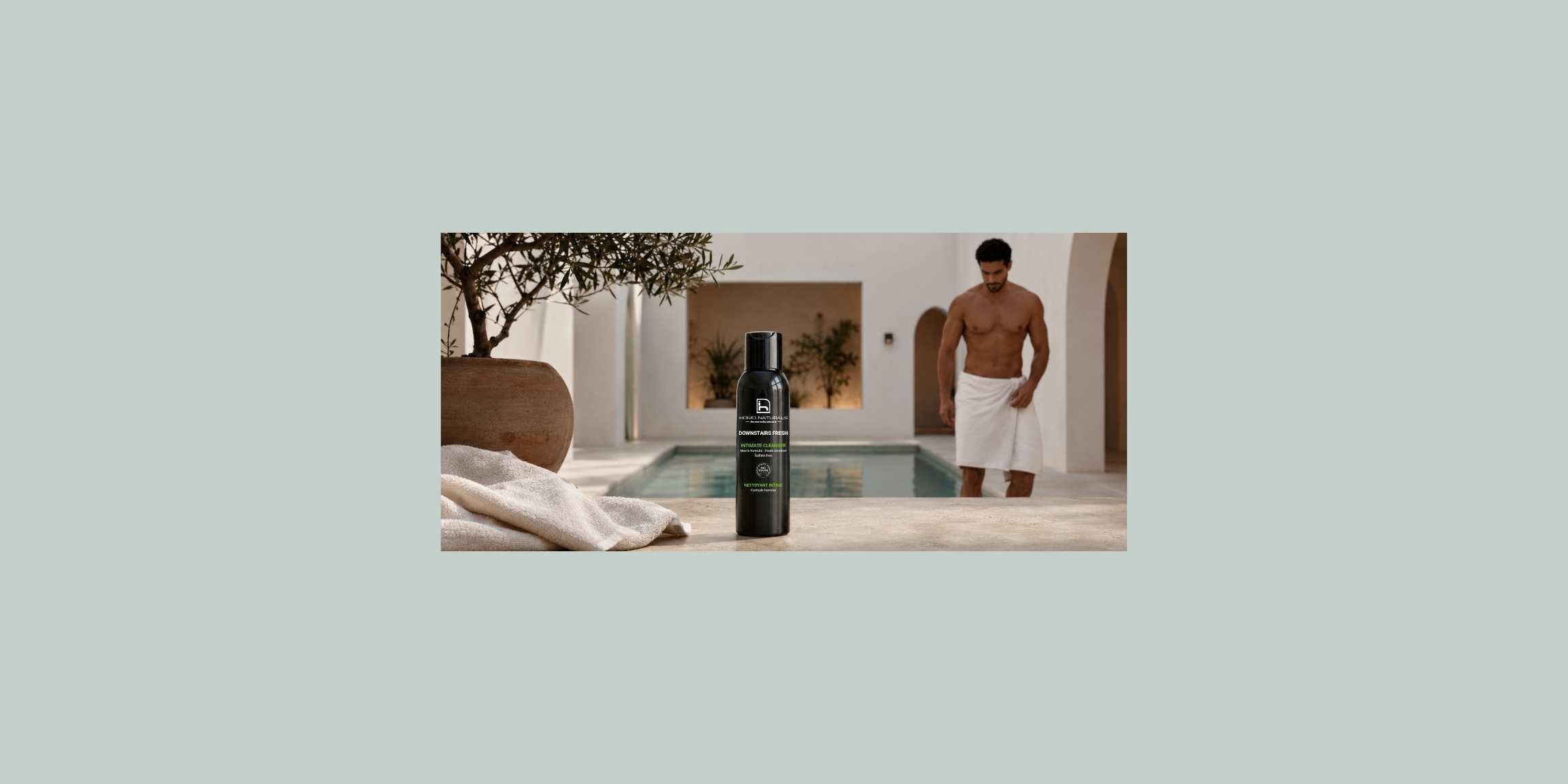
How to avoid bad odors in the intimate area of men
Odour in the male intimate area does not always indicate poor hygiene. The groin and genitals remain covered for much of the day, experience friction, and retain heat, moisture and sweat. These conditions can make the natural odour more noticeable, especially during the summer, after exercise or when wearing fabrics that do not allow the skin to breathe properly.
Male intimate hygiene is not about masking every odour with fragrance or repeatedly washing the area with harsh products. The aim is to remove sweat, secretions and accumulated residue without unnecessarily disrupting the skin’s natural balance.
In most cases, keeping the area clean and dry, changing after sweating and using a men’s intimate wash specifically formulated for this part of the body can help maintain a feeling of cleanliness and comfort throughout the day.
However, when a particularly strong or persistent odour appears suddenly and is accompanied by itching, pain, inflammation, lesions, discharge or discomfort when urinating, it is advisable to consult a healthcare professional. In these cases, the odour may be linked to irritation, infection or another condition that should not be managed with cosmetic products alone.
Why does odour develop in the male intimate area?
The genital area and groin have particular characteristics. They remain covered for many hours, are exposed to friction from clothing and can retain more moisture than other areas of the body. Sweat, sebum, shed skin cells and small amounts of bodily fluids can also accumulate there.
Freshly produced sweat is not usually the only cause of odour. The smell can become more noticeable when sweat and other residue remain on the skin and come into contact with the microorganisms that naturally live there. Heat and moisture also create the ideal environment for this activity to increase.

For this reason, it is common to notice a stronger intimate odour in situations such as:
- During the warmer months.
- After training or physical activity.
- After spending several hours in damp or sweaty clothing.
- When wearing very tight or poorly breathable underwear.
- When the area is not dried properly after showering.
- When secretions or residue build up beneath the foreskin.
The solution is not to remove all microorganisms from the skin or to apply more cleansing product. Excessive washing or the use of overly harsh formulas can also cause dryness, tightness or irritation. The key is to cleanse the area regularly, rinse thoroughly and keep it dry.
Is it normal for the male intimate area to have an odour?
Yes. The male intimate area has its own natural body odour and does not need to be completely odourless to be clean or healthy. Its intensity can vary depending on perspiration, physical activity, temperature, clothing and the amount of time since the last shower.
A mild odour that diminishes after the area has been washed and dried properly is usually considered normal. However, it is important to pay attention when the smell changes noticeably, becomes very strong, persists despite good hygiene or appears alongside other symptoms.
Signs that warrant medical assessment include:
- Itching, stinging or a burning sensation.
- Redness or inflammation of the glans or foreskin.
- Pain, sores, ulcers, blisters or rashes.
- Unusual discharge from the urethra.
- Discomfort or pain when urinating.
- Difficulty retracting the foreskin when this was previously possible.
- A strong odour that does not improve with daily hygiene.
These symptoms may be associated with irritation, balanitis, fungal or bacterial infections, sexually transmitted infections or other conditions. An intimate cleanser can support the daily care of the skin, but it does not replace medical diagnosis or treatment.
Main causes of male intimate odour
Intimate odour can have several causes, and in some cases more than one factor may be involved. Identifying what is contributing to it makes it easier to adjust the routine without relying on solutions that simply mask the problem.
1. Build-up of sweat and moisture
The groin contains sweat glands and usually remains covered. Exercise, heat, stress and certain fabrics can increase perspiration. When moisture remains trapped for hours, body odour becomes more noticeable and feelings of discomfort or chafing may also develop.
Showering after exercise, changing underwear and avoiding staying in a damp swimsuit are simple measures that can help reduce this build-up.
2. Insufficient drying after showering
Washing the area properly is important, but drying it is also an essential part of intimate hygiene. Getting dressed while moisture is still present between the folds, around the scrotum or beneath the foreskin encourages a warm, humid environment.

After showering, gently pat the area dry without rubbing vigorously. The towel should be clean and reserved for personal use.
3. Build-up of smegma
Smegma is a substance made up of shed skin cells, the skin’s natural oils, moisture and other secretions. It can accumulate around the glans and beneath the foreskin, particularly when this area is not cleaned regularly.
A small amount does not necessarily indicate a problem. However, when it builds up, it can cause odour, contribute to irritation and make proper hygiene more difficult.
Men with a foreskin should gently retract it during showering, provided this can be done without pain or resistance, cleanse the exposed area and rinse thoroughly before returning it to its natural position. The foreskin should never be forced back.
4. Tight or poorly breathable underwear
Clothing that is too tight increases friction and can trap heat and moisture. Choosing garments that allow adequate airflow and changing them every day helps keep the area drier.

After exercise, it is not enough to wait for clothing to dry while still wearing it. It is best to shower when possible and replace sweaty garments with clean clothes.
5. Insufficient hygiene
Not washing the area as often as needed allows sweat, sebum, shed skin cells and traces of bodily fluids to accumulate. This combination can intensify odour and contribute to skin discomfort.
Daily hygiene should include the penis, the glans when it can be exposed, the scrotum, the groin and the surrounding folds. Cleansing should be limited to external surfaces: products should never be introduced into the urethra or any other opening.
6. Excessive cleansing or overly harsh products
The opposite extreme is not beneficial either. Repeatedly washing the area, using very hot water or applying formulas with strong cleansing agents, intense fragrances or potentially irritating ingredients can disrupt skin comfort.
When the skin becomes irritated, redness, itching, dryness or greater sensitivity to friction may appear. In these cases, adding fragrance to conceal odour can worsen discomfort rather than resolve it.
How to prevent odour in the male intimate area
Preventing intimate odour does not require a complicated routine. In most cases, the most effective habits are also the simplest: maintain gentle daily hygiene, dry the skin properly and avoid allowing moisture to remain around the groin and genitals for too long.
These recommendations can help maintain comfort in the male intimate area:
- Wash the external genitals and groin every day.
- Clean beneath the foreskin when it can be retracted comfortably.
- Rinse thoroughly to prevent product residue from remaining on the skin.
- Gently dry all folds before getting dressed.
- Change underwear daily and whenever it becomes damp.
- Shower or cleanse the area after exercise.
- Avoid remaining in wet swimwear or sportswear for several hours.
- Choose comfortable clothing that does not create excessive friction.
- Avoid applying body deodorants or fragrances directly to the genitals.
Consistency matters more than the intensity of cleansing. Gentle daily washing is usually more respectful of the skin than trying to compensate for accumulated sweat with harsh washing or heavily fragranced products.
Keep the area dry throughout the day
Moisture creates the conditions that can intensify odour and soften the skin. For this reason, intimate care does not end when you step out of the shower.
Before putting on underwear, make sure the penis, scrotum and groin are completely dry. Use the towel by gently patting the skin rather than rubbing an area that is particularly sensitive to friction.
If you perspire heavily, carrying a spare pair of underwear can be useful, especially during warmer months, while travelling or on long days away from home.
Change after exercise
The combination of sweat, heat, friction and tight clothing explains why intimate odour can become more noticeable after training. Remaining in the same clothes once exercise has finished prolongs contact between moisture and the skin.
It is best to shower and put on clean clothes as soon as possible. When a shower is not available, changing at least your underwear and any damp garments can help restore comfort until a full wash is possible.
Choose breathable underwear
Underwear should fit comfortably without placing excessive pressure on the area. Garments that are too tight can increase friction and make it harder for moisture to evaporate, particularly during summer or physical activity.

Beyond the specific fabric, it is important that underwear feels comfortable, is clean and allows reasonable airflow. Clothing should also be adapted to the climate, activity level and individual tendency to perspire.
How to wash the male intimate area correctly
Proper hygiene should remove accumulated sweat, residue and secretions without subjecting the skin to unnecessary friction. The process can be easily incorporated into the daily shower.
- Wet the area with lukewarm water. Very hot water can increase feelings of dryness or discomfort.
- Apply a small amount of cleanser to your hand. Using more product is not necessary to achieve a better cleanse.
- Gently wash the penis, scrotum, groin and surrounding folds. Avoid using rough sponges or rubbing vigorously.
- Gently retract the foreskin if this can be done without discomfort. Clean the glans and the exposed inner area without ever forcing the movement.
- Rinse thoroughly. Product residue can cause discomfort on sensitive skin.
- Return the foreskin to its natural position. It should not remain retracted after washing.
- Gently dry the area. Pay particular attention to the folds and the space beneath the foreskin.
Cleansing should be limited to the external genital area. Water, soap or any other product should never be introduced into the urethra. It is also best to avoid brushes, exfoliating sponges or accessories that could cause minor injuries.
Intimate hygiene for uncircumcised men
Moisture, shed skin cells, natural oils and secretions can accumulate beneath the foreskin. For this reason, when the foreskin retracts normally, this area should be included in daily hygiene.
Retraction should be gentle and only taken as far as feels comfortable. If pain, resistance, inflammation or difficulty returning the foreskin over the glans occurs, medical advice should be sought rather than forcing it.
Intimate hygiene for circumcised men
The absence of a foreskin does not remove the need for proper intimate hygiene. Sweat, moisture and residue can still accumulate around the glans, scrotum and groin.
The area should be washed and dried every day following the same principles: gentle cleansing, thorough rinsing and no excessive friction.
How should the area be cleaned after sex?
After sex, traces of lubricant, condom material, sweat or bodily fluids may remain on the skin. Washing the external area with lukewarm water and a gentle product can help restore a feeling of cleanliness and comfort.
There is no need to wash aggressively or use antiseptic products routinely. Washing after sex does not, by itself, prevent sexually transmitted infections and does not replace barrier protection or diagnostic testing when recommended.
How many times a day should the male intimate area be washed?
As a general guide, washing once a day is usually enough to maintain good male intimate hygiene. However, frequency can be adapted according to perspiration, climate, physical activity and individual needs.
An additional cleanse may be helpful in situations such as:
- After training or exercising.
- After particularly heavy perspiration.
- After swimming or remaining in wet swimwear.
- When clothing becomes damp during a hot day.
- After sex, to remove bodily fluids or traces of lubricant.
Washing the area again does not mean that cleanser needs to be applied every time. When the skin is sensitive or has already been washed recently, lukewarm water followed by careful drying may sometimes be enough.
The need to wash repeatedly to control an odour that returns soon after showering may indicate that another factor is involved. If the smell persists or is accompanied by discomfort, increasing the frequency of washing is not a substitute for medical assessment.
Men’s intimate wash or conventional shower gel?
Genital skin is delicate, regularly exposed to moisture and friction, and may react more readily to certain products. For this reason, the gel used on the rest of the body is not always the most suitable option for intimate hygiene.
Some conventional shower gels contain strong cleansing systems or fragrances designed to leave a noticeable scent on areas such as the chest, back or arms. When applied to a more sensitive area, they may contribute to tightness, itching or irritation, especially when used several times a day.
A men’s intimate wash should be formulated to gently cleanse the external genitals and groin, rinse away easily and preserve skin comfort. Its purpose is not to perfume the area or remove its natural odour, but to wash away the substances that accumulate throughout the day.
Why should odour not be masked with fragrance?
Fragrances, sprays and body deodorants do not address the build-up of sweat or moisture. They simply add another scent and may come into contact with particularly sensitive tissues.

When odour is present, the appropriate approach is to wash and dry the area, change damp clothing and identify the possible cause. Masking it may make it harder to notice a persistent change that requires attention.
Are antibacterial products necessary?
The skin naturally hosts microorganisms. Maintaining intimate hygiene therefore does not mean sterilising the area or removing its entire microbiome.
Antiseptic and antibacterial products should not be used routinely on the genitals unless recommended by a healthcare professional. A gentle cleansing formula and thorough rinsing are sufficient for everyday cosmetic care.
A feeling of cleanliness does not depend on how much foam a product creates or how strong a fragrance it leaves behind. It comes from gently removing residue, rinsing thoroughly and preventing moisture from remaining trapped on the skin.
What should a men’s intimate wash offer?
When choosing an intimate hygiene product, it is important to assess the formula as a whole, rather than focusing only on its fragrance or how much foam it produces.
Some of the most relevant characteristics include:
- Gentle cleansing: it should remove daily sweat and residue without leaving the skin feeling tight.
- A formula designed for the male intimate area: the product should be developed for use on external genital skin.
- Easy rinsing: it should not leave a heavy film or residue within the skin folds.
- Suitable for daily use: the formula should be appropriate for regular intimate hygiene.
- No intense synthetic fragrances: the purpose of the product should be to cleanse, not to mask odour with a lingering scent.
- A comfortable skin feel: after rinsing, the skin should feel clean and comfortable rather than excessively stripped.
Downstairs Fresh: daily male intimate hygiene
At HOMO NATURALS, we developed Downstairs Fresh specifically for male intimate hygiene. Its formula gently cleanses the penis, scrotum and groin while removing sweat and residue that build up throughout the day.
Downstairs Fresh is formulated without sulfates, petroleum derivatives, parabens or synthetic fragrances. Its natural, Bio and Vegan composition is designed to support daily hygiene while respecting the particular needs of male intimate skin.
It can be used during the daily shower and after exercise or heavy perspiration whenever the area needs to feel refreshed.
How to use Downstairs Fresh
- Wet the intimate area with lukewarm water.
- Apply a small amount of product to your hand.
- Gently spread it over the external genitals and groin.
- If you have a foreskin and can retract it comfortably, gently cleanse the exposed area.
- Rinse thoroughly with water.
- Dry the skin completely before getting dressed.

The product is intended for external use only. If you experience active irritation, pain, sores, discharge or any persistent symptoms, discontinue the use of cosmetic products on the affected area and consult a healthcare professional.
Common mistakes in male intimate hygiene
Some habits that seem to provide a greater feeling of cleanliness can actually have the opposite effect and contribute to discomfort in the intimate area.
Using too much product
Applying more cleanser does not necessarily improve the result. A small amount, evenly distributed, is enough to cleanse the external genitals. Using too much product can make rinsing more difficult and leave residue between the skin folds.
Scrubbing the skin too vigorously
Excessive friction can cause redness, minor irritation and increased sensitivity. Cleansing should always be carried out gently using your hands.
Using shared or rough sponges
Sponges can retain moisture and may be too abrasive for the genital area. Clean hands allow better control of pressure and make it easier to cleanse the skin folds gently.
Not rinsing thoroughly
Residue from shower gel or cleanser can remain trapped beneath the foreskin or around the scrotum. Spending a few extra seconds rinsing thoroughly helps prevent this build-up.
Getting dressed before the area is completely dry
Trapped moisture can intensify odour and increase friction. Drying the area is an essential part of the routine and should never be considered an optional step.
Applying fragrances or deodorants to the genitals
Products designed for the underarms or body should never be applied directly to the glans, foreskin or scrotum. If your goal is to maintain a fresh feeling, improving hygiene, drying the area properly and changing your clothing are far more effective.
Trying to compensate for odour with constant washing
If odour returns immediately or persists despite a proper hygiene routine, washing more frequently may irritate the skin without addressing the underlying cause. In these situations, it is important to look for other symptoms and seek medical advice when necessary.
Using home remedies
Vinegar, baking soda, alcohol, pure essential oils and other household substances are not formulated for genital skin and may cause irritation or disrupt its natural balance.

If discomfort persists, avoid experimenting with homemade remedies or using medication without a proper diagnosis. The appropriate treatment depends on the underlying cause.
When should you consult a doctor?
Most cases of intimate odour improve by adopting good daily hygiene, reducing moisture and using products specifically designed for the genital area. However, there are situations in which odour may be a sign of an underlying condition that requires medical assessment.
Seek medical advice if you experience any of the following symptoms:
- A strong odour that persists for several days despite proper hygiene.
- Severe itching or a burning sensation.
- Pain when urinating.
- Significant redness or swelling of the glans or foreskin.
- Unusual discharge.
- The appearance of sores, blisters or ulcers.
- Fever or general malaise.
- Difficulty retracting the foreskin when this was previously possible.
These symptoms may be associated with infections, balanitis, fungal infections, sexually transmitted infections or other medical conditions that require a specific diagnosis and treatment.
Cosmetic products are intended for the daily care of healthy skin and should never replace medical assessment when signs of illness are present.
Frequently asked questions about male intimate odour
Is it normal for the male intimate area to have an odour?
Yes. The skin of the genital area has its own natural scent, which can vary depending on perspiration, physical activity or environmental temperature. The important thing is to pay attention to significant changes or the appearance of other symptoms such as pain, itching or discharge.
Why does my groin smell even though I shower every day?
Odour may result from heavy perspiration, remaining in damp clothing for several hours, not drying the area properly or wearing poorly breathable underwear. If the smell persists despite good hygiene, it is advisable to consult a healthcare professional.
How often should the male intimate area be washed?
Under normal circumstances, washing once a day is usually sufficient. After exercise, heavy perspiration or spending several hours in wet clothing, an additional cleanse may be beneficial.
Can I use shower gel to wash my intimate area?
Although occasional use is unlikely to cause problems, for daily hygiene it is preferable to use a cleanser specifically formulated for the male intimate area, particularly if the skin is sensitive or the area needs to be washed frequently.
Do fragrances eliminate intimate odour?
No. Fragrances only mask odour temporarily. When an odour develops, it is better to identify its cause and maintain proper hygiene rather than trying to cover it with perfume.
Does pubic hair cause unpleasant odour?
Pubic hair does not cause odour by itself. However, it can retain moisture and sweat for longer. Maintaining good hygiene is far more important than removing the hair completely.
Does hair removal prevent intimate odour?
Not necessarily. Some men notice a greater feeling of freshness, but hair removal does not replace proper hygiene or prevent odour on its own.
Is it advisable to use talcum powder?
It is generally unnecessary. Keeping the skin clean and dry while wearing breathable underwear is usually sufficient for most men.
Can I wash the area several times a day?
Yes, whenever there is a genuine need, such as after exercise or heavy perspiration. The key is to use a skin-friendly cleanser and avoid aggressive washing.
What type of underwear helps reduce intimate odour?
Clean, comfortable and breathable underwear helps moisture evaporate and reduces heat build-up. It is also advisable to change underwear whenever it remains damp after physical activity.
Conclusion
Male intimate hygiene is about much more than eliminating body odour. Keeping the area clean and dry while using suitable products helps maintain skin comfort and prevent many of the issues associated with excess moisture and perspiration.
A simple routine, followed consistently, is usually enough to maintain proper intimate hygiene throughout the year. Showering after exercise, changing damp clothing and drying the area carefully make a far greater difference than relying on fragrances or harsh products.

At HOMO NATURALS, we developed Downstairs Fresh exclusively for the needs of male intimate skin. Its natural, Bio, Vegan and sulfate-free formula gently cleanses the external genital area while respecting the skin's natural balance, making it the ideal choice for daily intimate hygiene and lasting freshness throughout the day.
Because caring for intimate health is also an essential part of personal care.
Discover Downstairs Fresh
The natural men's intimate wash specifically developed for the daily hygiene of the male intimate area.
✔ Sulfate-free
✔ No petroleum derivatives
✔ Paraben-free
✔ No synthetic fragrances
✔ Natural, Bio & Vegan
Discover how it can become part of your daily intimate care routine.
Scientific references
- American Academy of Dermatology. Skin Care Basics for Men.
- NHS. Balanitis.
- Cleveland Clinic. Smegma.
- Centers for Disease Control and Prevention (CDC). Sexually Transmitted Infections Prevention.
- European Association of Urology (EAU). Guidelines on Urological Infections.
- International Union against Sexually Transmitted Infections (IUSTI). European Guidelines.

3 comments
Bonjour Chokki, envoyez-nous un message direct afin que notre service commercial puisse répondre à votre demande.
Cordialement,
L’Équipe Homo Naturals
Info Homo Naturals
Je suis intéressé par vos gel douche intime masculin.Je veux bien être votre représentant pour la vente de votre gel au Bénin.
CHOKKI DODJI
Hola, Ustedes recomiendan ropa interior de algodón, pero ¿la ropa interior de bambú también es buena?
Leí que la fibra de bambú también tiene un efecto absorbente, al igual que el algodón.
¿Cuál es el mejor?
Mauricio
Leave a comment
This site is protected by hCaptcha and the hCaptcha Privacy Policy and Terms of Service apply.